
Composite Liner: Slope vs Pond Base Laying
Composite geomembrane laying differs between pond base and slope: the base needs smooth contact and no dead wrinkles, while slopes need water-direction laps, slack and anchoring against sliding; corners are rounded with offset seams. Laps, trench size and inspection ratio follow drawings and codes.
Loading difference: base vs slope
Composite geomembrane bonds a membrane to geotextile, providing both containment and protection for fish, shrimp and lotus ponds, reservoirs, lakes and small slope works. The same roll behaves differently on a pond base versus a slope: the base mainly carries planar load and containment, while the slope resists self-weight, water pressure and downhill sliding, and corners concentrate bending stress. This article compares laying practice by location. Lap width, anchor trench size, corner radius and test pressure below are common reference ranges; final values follow project drawings, current codes and the technically confirmed requirements agreed by both parties.
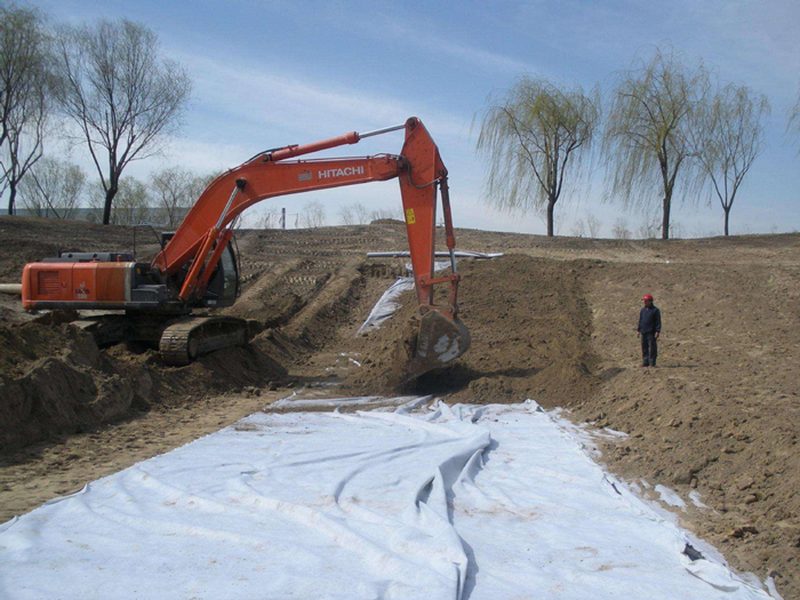
Related materials: composite geomembrane and geotextile. For selection logic, see how to choose composite geomembrane.
Laying on the pond base
The base is a flat working surface; the priorities are smooth contact with the subgrade, avoiding dead wrinkles and local voids.
- Unrolling direction: unroll in sequence from one end to the other; rolls are carried and laid by hand to settle naturally onto the base, without hard pulling.
- Slack and wrinkles: leave proper slack in the membrane and do not retain dead wrinkles; wrinkles concentrate stress and may tear under water load or surcharge.
- Lap layout: lap width follows codes and design, commonly around the 10cm range; seams run roughly perpendicular to the main stress direction, and large-base seams are laid straight to ease later inspection and repair.
- Junction margin: the base is generally not anchored separately; fixation relies on the toe anchor trench around the perimeter, and a margin is left at the base-toe junction to accommodate settlement after filling.
Laying on the slope
On the slope, the priorities are water-direction laps, slack and reliable anchoring to prevent sliding and water entering the laps.
- Laying direction: unroll along the slope; once the crest-to-toe or toe-to-crest direction is set, do not reverse it.
- Water-direction laps: the upper sheet overlaps the lower, with laps following the water flow; reversed laps let water enter between the two layers and hollow them out.
- Slack: leave slack on the slope and do not tension it tight; a tight membrane cracks more easily under foot traffic or soil settlement. The margin is set by slope length, gradient and design.
- Anchoring: set an anchor trench at the crest, fold the membrane into it and backfill firmly; the toe is held by anchor trench, strips or concrete edge. Steeper slopes add slope fixation points with protective pads, avoiding nails contacting the membrane directly.
Corners and irregular details
Internal corners at the base-slope junction and membrane penetrations are the nodes where leakage and tearing are more likely, and are treated separately.
- Rounded corners: do not fold a right angle hard; shape a transition curve in the base, with radius set by design, commonly around the 20cm range.
- Offset seams: avoid cross seams concentrated at corners; cross seams carry stress in several directions and are relatively more prone to cracking, so seams should pass offset beside the corner.
- Reinforcement: an extra membrane strip may be added at corners, width set by design, commonly around the 50cm range, welded firmly to the main membrane around its edges.
Laps, hot-wedge welding and seam testing
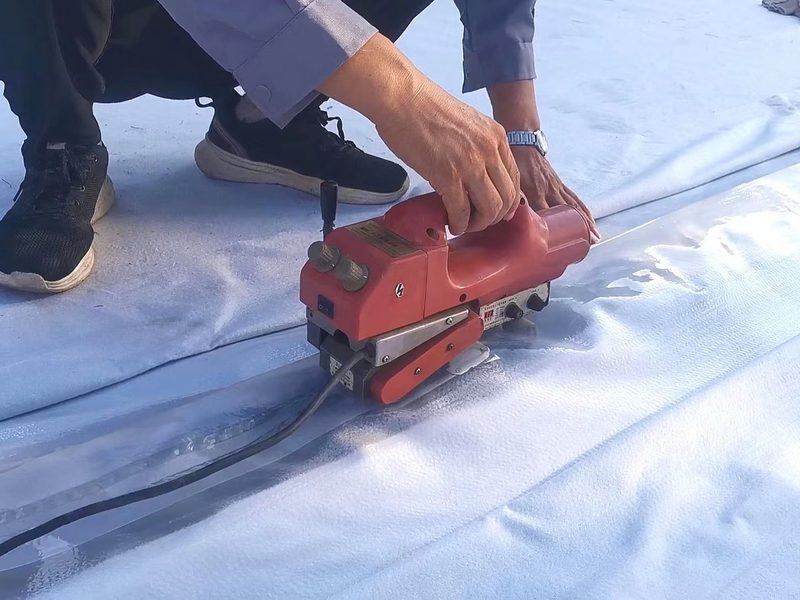
Panel joints are mainly double-track hot-wedge welded; joints that cannot be hot-welded and repair patches follow the process with extrusion weld. Trial welds on site set temperature and travel speed before production welding.
- Clean laps: remove water, dust and oil from the lap faces before welding; a dirty interface weakens the bond.
- Welding parameters: keep the welder travel speed steady; too fast may lack fusion, too slow may overheat and burn. Parameters follow site trial welds and the material process requirements.
- Seam direction: slope seams run mainly along the slope to reduce cross-slope seams under shear.
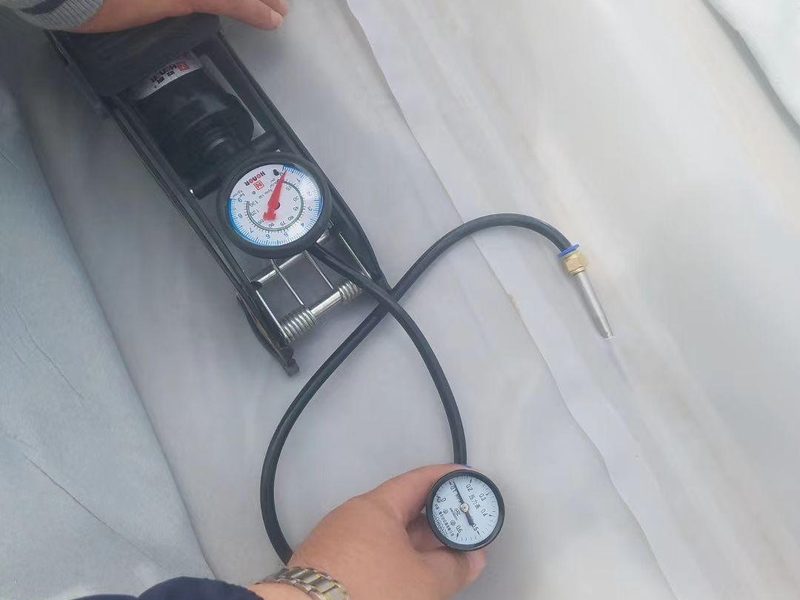
Welded seams pass air-pressure leak testing; a common reference is holding pressure at a set gauge reading with no drop. Test pressure, holding time and sampling ratio follow codes and design. Welding practice and inspection are detailed in geomembrane welding and seam inspection notes.
Common rework and causes
Based on site experience, several common rework cases and their main causes are listed below for prevention before construction:
- Slope membrane sliding and toe bunching: often caused by insufficient slack on the slope or inadequate anchor trench and toe weighting.
- Corner tearing: often caused by an unrounded corner or a cross seam left concentrated at the corner.
- Seam leakage: often caused by an unclean lap face or incorrect welding temperature and speed.
- Membrane blistering: often caused by voids or standing water in the base, or incomplete compaction under the membrane.
Dezhou Yurun Geotechnical Material Co., Ltd. supplies composite geomembrane, HDPE geomembrane and geotextile, and can help verify structure, specs and available inspection documents. State the location, slope and working conditions of your pond or water project for selection and laying guidance. Submit an engineering inquiry or see parameters on the composite geomembrane product page.
Related Products
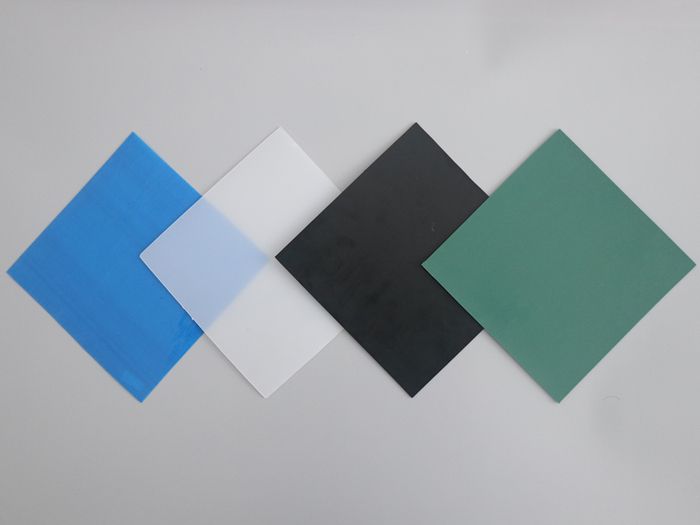
Geomembrane
HDPE / LDPE / LLDPE impermeable membrane
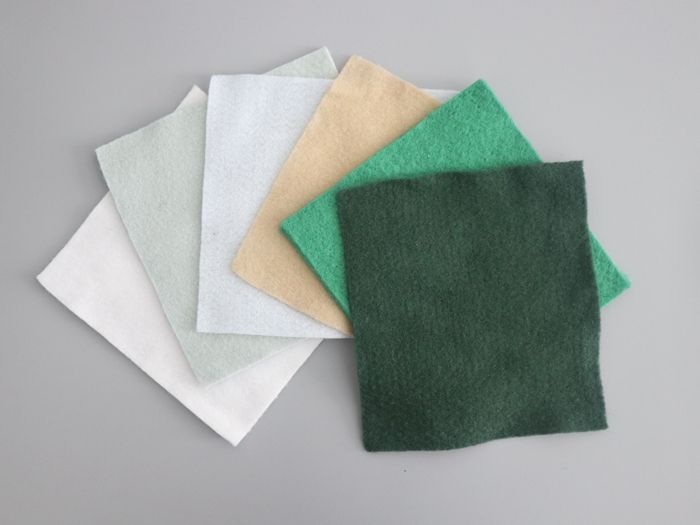
Geotextile
Filament / staple / woven geotextile
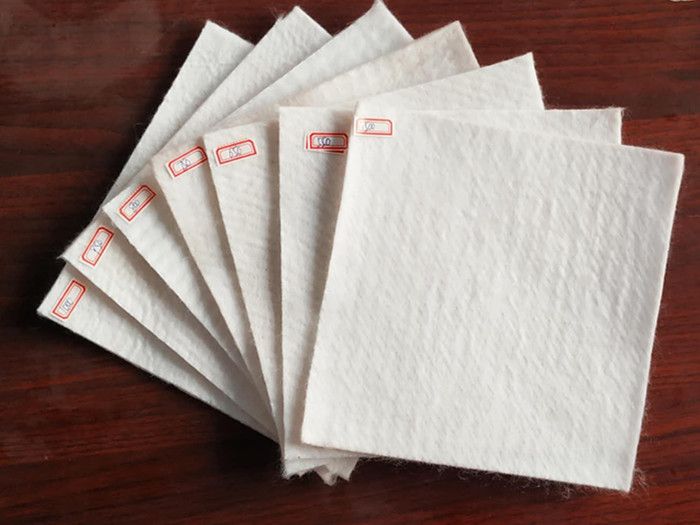
Composite Geomembrane
Two-cloth-one-membrane / one-cloth-one-membrane
Related Cases
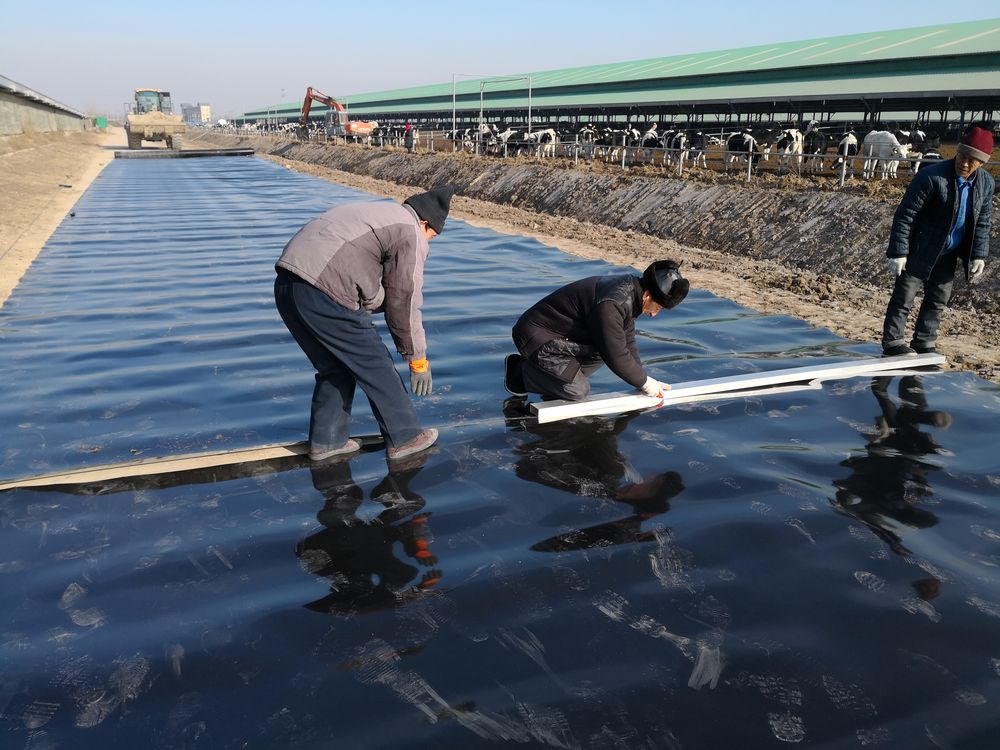
Artificial Lake / Tank Laying
Geomembrane, composite geomembrane, geotextile protection
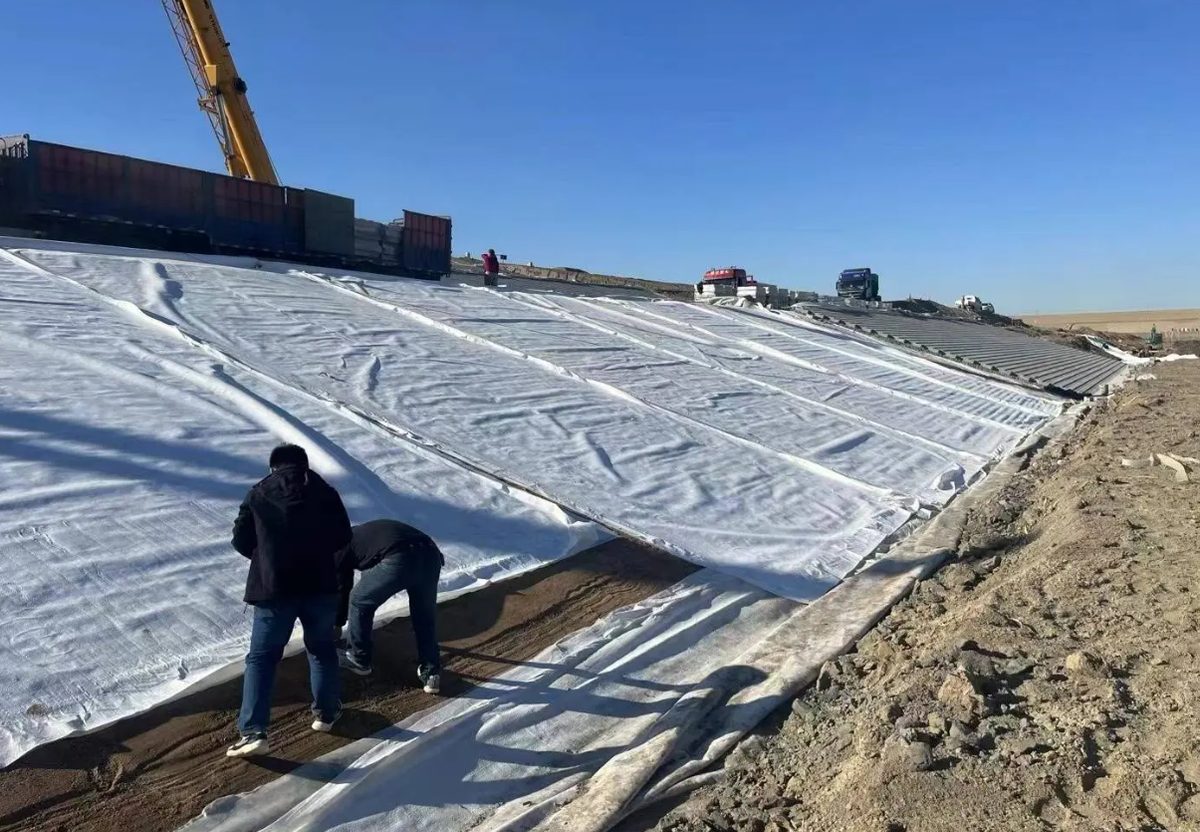
Xi'an Park Geotechnical Materials Award
Geotextile and supporting turnover materials
Inner Mongolia Canal Membrane Award
Composite geomembrane (two-fabric one-membrane)
Common Questions
Are you a manufacturer? What do you supply?
Dezhou Yurun Geotechnical Material Co., Ltd. is located in the Lingcheng Economic Development Zone, Dezhou, Shandong. Products include HDPE/LDPE/LLDPE smooth, textured and dimpled geomembrane, filament/staple/woven geotextile, composite geomembrane (one-cloth-one-membrane, two-cloth-one-membrane), sodium bentonite GCL, composite drainage net, eco bags, tunnel waterproof board, drainage board, flame-retardant woven bags, weed control fabric and concrete carpet, serving landfills, tailings ponds, reservoirs, wastewater ponds, digesters, slopes and road reinforcement. Self-produced and sourced categories follow actual operations.
What is the manufacturer contact number?
Hotline 0534-8661234, mobile/WeChat 13969202278 (Mr. Zhao), for engineering procurement, bidding, site selection and containment retrofit inquiries. When contacting us, please state the project scenario (landfill, tailings, reservoir, aquaculture pond, slope, etc.), material type, thickness or weight, estimated quantity, delivery region and required lead time, so available specs and a comparable quote can be prepared.
Where is the company located? Can I visit the plant?
The company is at the middle section of Wuyou Street, west side, Lingcheng Economic Development Zone, Dezhou, Shandong. Engineering and project clients are welcome to visit by appointment; please call ahead to confirm the reception time. On a visit you can review roll specs, samples, stock and related categories. Remote clients may first review photos, spec sheets and inspection documents before arranging samples or a plant visit.