
Winter Geomembrane Laying: Cold Weather and Backfill Notes
In cold weather the membrane stiffens, the base may hold frost and snow, and anchor trenches and backfill are hard to compact. Warm rolls, clear frost and dry the base, sieve and layer backfill, hold unwelded membrane against wind and snow, and inspect membrane and seams before spring refill. Practice follows drawings and codes.
Four challenges of winter laying
In cold weather, containment work faces challenges beyond welding: the membrane stiffens and is hard to smooth, the base may hold frost and snow, anchor-trench backfill is hard to compact, and cloddy backfill settles unevenly. If any step is missed, settlement, cracking or leakage often shows after the spring thaw. This article reviews winter practice across laying, base preparation, anchoring, backfill, schedule sequencing and resumption inspection. Temperature ranges and backfill lift thickness below are common reference practices; final site conditions and acceptance requirements follow project drawings, current codes and the technically confirmed requirements agreed by both parties.
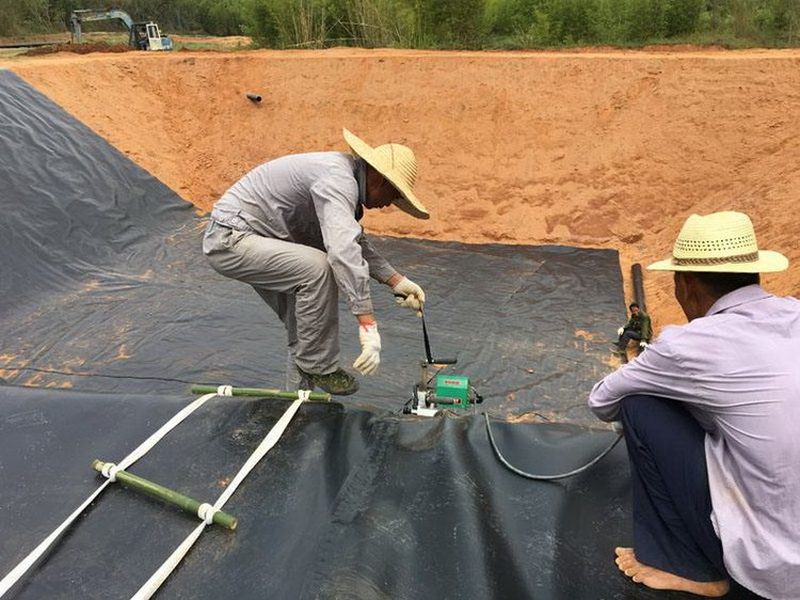
Related materials: HDPE geomembrane and geotextile cushion. Welding and inspection are detailed in geomembrane welding and seam inspection notes.
Stiff membrane and unrolling in cold
In low temperatures the membrane loses flexibility and rolls unroll with hard creases more easily. Unlike ordinary wrinkles, a hard crease concentrates stress and may tear from the crease edge after filling or backfilling.
- Warm the rolls: bring rolls to site early and keep them in a sheltered shed or temporary warm tent; do not unload and lay straight from a cold truck. Let the membrane approach ambient temperature before unrolling for steadier flexibility.
- Carry, do not drag: unroll by carrying the rolls forward rather than dragging on the ground; dragging scratches the face, and scratched areas are more prone to brittle cracking in the cold.
- Treat hard creases: do not stamp a crease flat; stamping will not smooth it and may thin the crease edge. Open the crease, reposition the sheet and let it settle naturally onto the base.
Frost, snow and moisture in the base
Do not lay membrane directly on a base with frozen soil, ice or snow. Frozen soil settles on thawing, pulling the membrane down and possibly opening seams; membrane laid on ice leaves a void once the ice melts.
- Clear snow and ice: remove surface snow and ice before laying; treat frozen soil per design. Small areas may wait for thaw and compaction, or be covered with insulation to warm the base when the schedule is tight.
- Drain and dry: where the base is wet or iced, drain and air-dry first; lay only after moisture drops within the allowable range.
- Abnormal subgrade: soft spots, frost heave or seepage points are treated and accepted before membrane laying.
Anchor trench in winter
Winter anchor-trench quality directly affects how reliably the membrane is held.
- No frost in the trench bottom: dig the trench to design depth; the bottom must hold no frozen soil. Frozen backfill cannot be compacted, and spring thaw lets the fill settle and loosens the membrane.
- Backfill soil: use sound soil free of frozen clods, stones and debris; backfill in layers, control each lift thickness and compact properly.
- Crest drainage: drain the trench crest to keep meltwater out; freezing expansion can lift the membrane.
Backfill and weighting protection
Winter backfill soil tends to form clods; cloddy fill compacts poorly and loads the membrane unevenly.
- Soil preparation: sieve or air-dry backfill to break frozen clods; the first lift uses fine soil at design thickness, without placing gravel directly.
- Machine protection: backfill machinery does not run directly on the membrane; lay a protective cushion first. The membrane is more brittle in the cold and easier to damage under rolling.
- Balanced backfill: backfill and weight both sides of the slope membrane symmetrically, avoiding one-sided pushing that shifts the sheet.
Separate laying and welding schedules
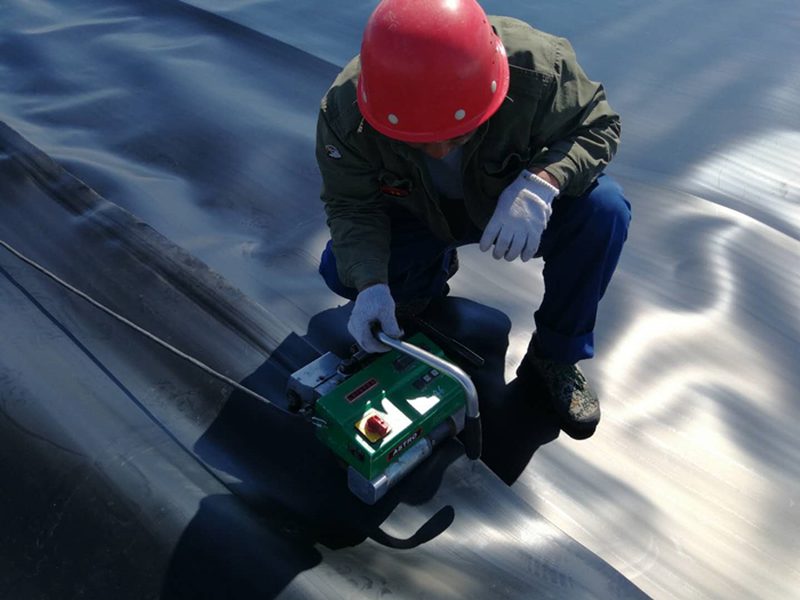
Laying and welding are two separate trades. In cold weather, membrane may be laid and anchored first, then welded once the temperature returns to the range allowed by the material process, so welding is less affected by low temperature. Welding temperature and speed follow trial welds and the material process requirements.
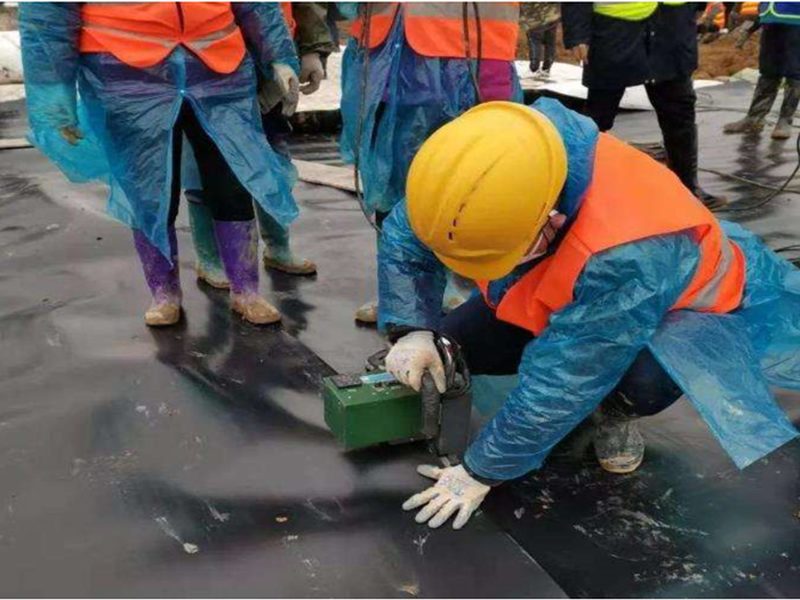
- Hold unwelded membrane down: weight sheets not yet welded to prevent wind lift and snow deformation.
- Clean laps: keep lap faces clear so snow, ice or debris is trapped between seams and weakens the bond.
- Weather window: pause welding in rain, snow, condensation or strong wind per process requirements; the allowable temperature range follows the material process and codes.
Spring resumption inspection
In spring, do not fill water or add cover directly; complete a review first.
- Membrane check: look for new cracks, focusing on hard creases, trench edges and lap areas.
- Seam sampling: repeat air-pressure sampling on seams; repair leaks or defects promptly.
- Close the loop: repair and accept problems before filling water or placing cover, so handling does not become far costlier after impoundment.
Dezhou Yurun Geotechnical Material Co., Ltd. supplies HDPE geomembrane, geotextile cushion and related materials, and can help verify specs and available inspection documents. State the project location, slope, local climate and construction schedule for selection and laying guidance. Submit an engineering inquiry or see parameters on the geomembrane product page.
Related Products
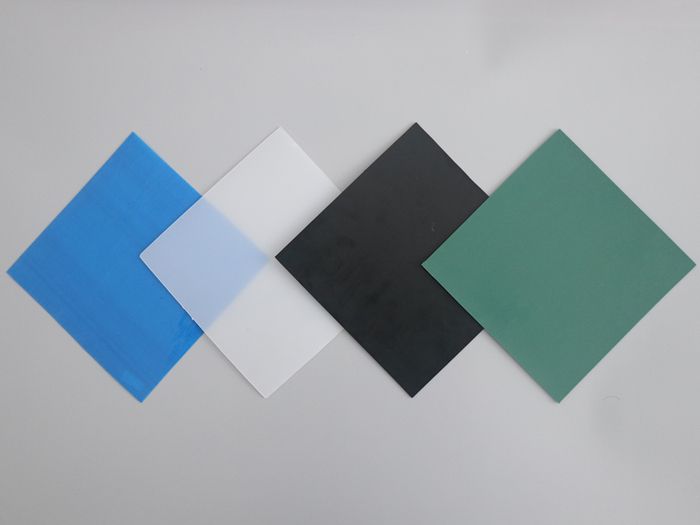
Geomembrane
HDPE / LDPE / LLDPE impermeable membrane
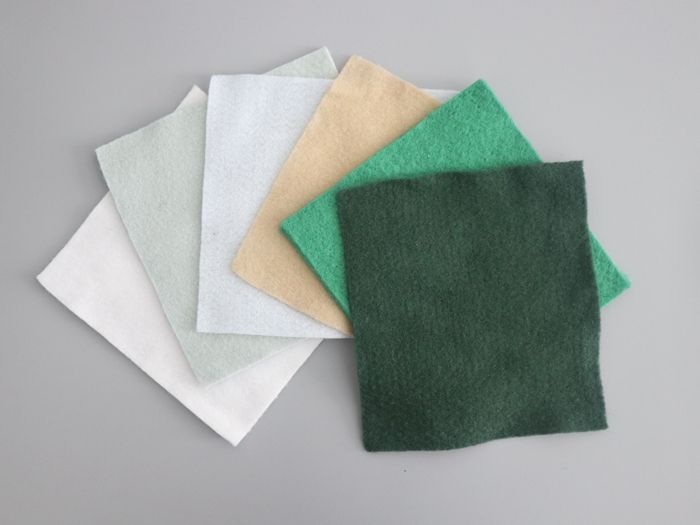
Geotextile
Filament / staple / woven geotextile
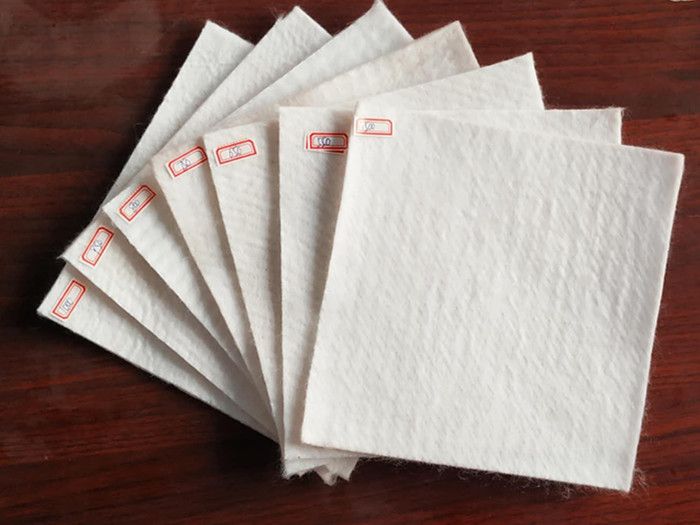
Composite Geomembrane
Two-cloth-one-membrane / one-cloth-one-membrane
Related Cases
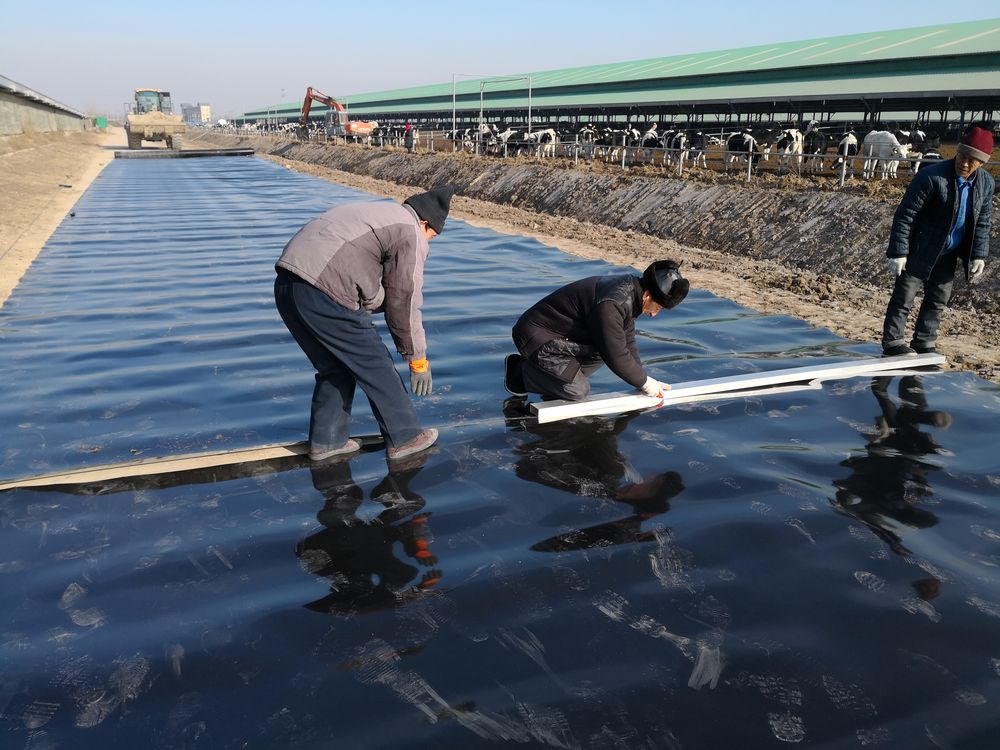
Artificial Lake / Tank Laying
Geomembrane, composite geomembrane, geotextile protection
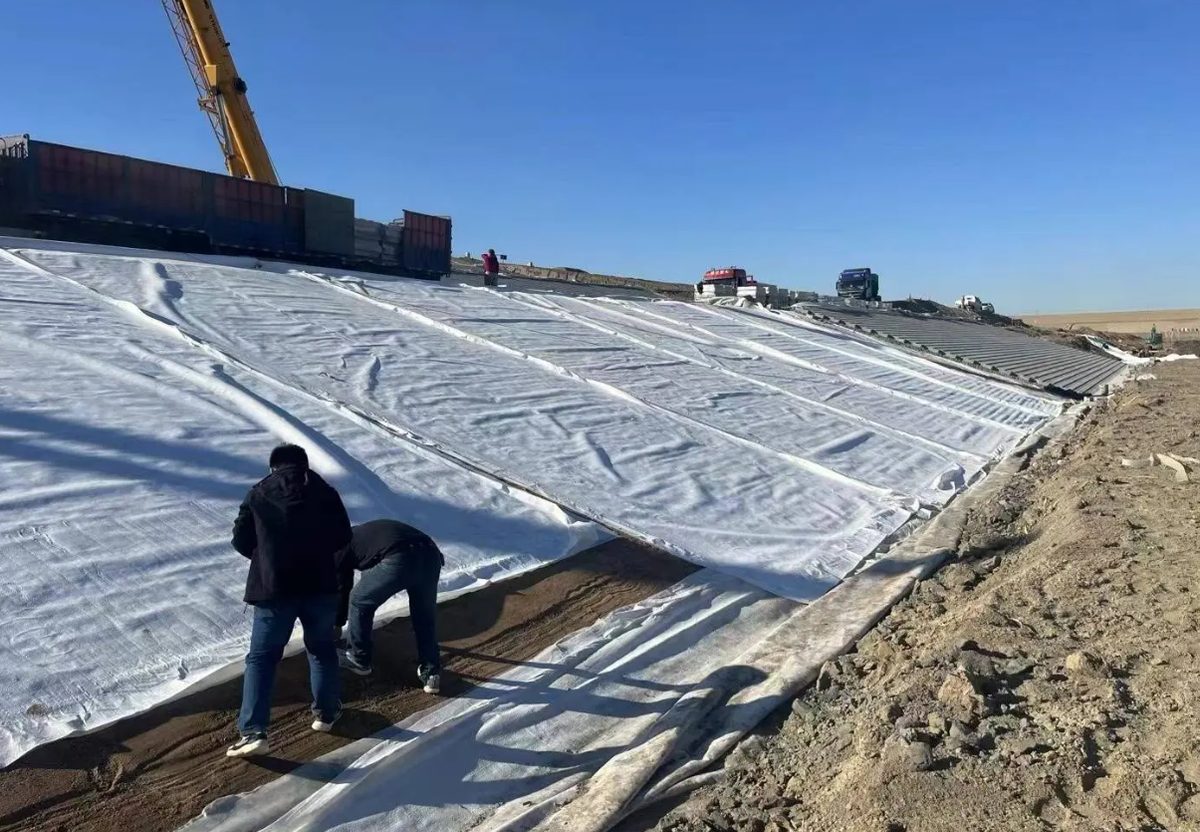
Xi'an Park Geotechnical Materials Award
Geotextile and supporting turnover materials
Livestock Wastewater Pond Lining
HDPE geomembrane, matching geotextile
Common Questions
Are you a manufacturer? What do you supply?
Dezhou Yurun Geotechnical Material Co., Ltd. is located in the Lingcheng Economic Development Zone, Dezhou, Shandong. Products include HDPE/LDPE/LLDPE smooth, textured and dimpled geomembrane, filament/staple/woven geotextile, composite geomembrane (one-cloth-one-membrane, two-cloth-one-membrane), sodium bentonite GCL, composite drainage net, eco bags, tunnel waterproof board, drainage board, flame-retardant woven bags, weed control fabric and concrete carpet, serving landfills, tailings ponds, reservoirs, wastewater ponds, digesters, slopes and road reinforcement. Self-produced and sourced categories follow actual operations.
What is the manufacturer contact number?
Hotline 0534-8661234, mobile/WeChat 13969202278 (Mr. Zhao), for engineering procurement, bidding, site selection and containment retrofit inquiries. When contacting us, please state the project scenario (landfill, tailings, reservoir, aquaculture pond, slope, etc.), material type, thickness or weight, estimated quantity, delivery region and required lead time, so available specs and a comparable quote can be prepared.
Where is the company located? Can I visit the plant?
The company is at the middle section of Wuyou Street, west side, Lingcheng Economic Development Zone, Dezhou, Shandong. Engineering and project clients are welcome to visit by appointment; please call ahead to confirm the reception time. On a visit you can review roll specs, samples, stock and related categories. Remote clients may first review photos, spec sheets and inspection documents before arranging samples or a plant visit.